Wire ropes for floating offshore wind turbines
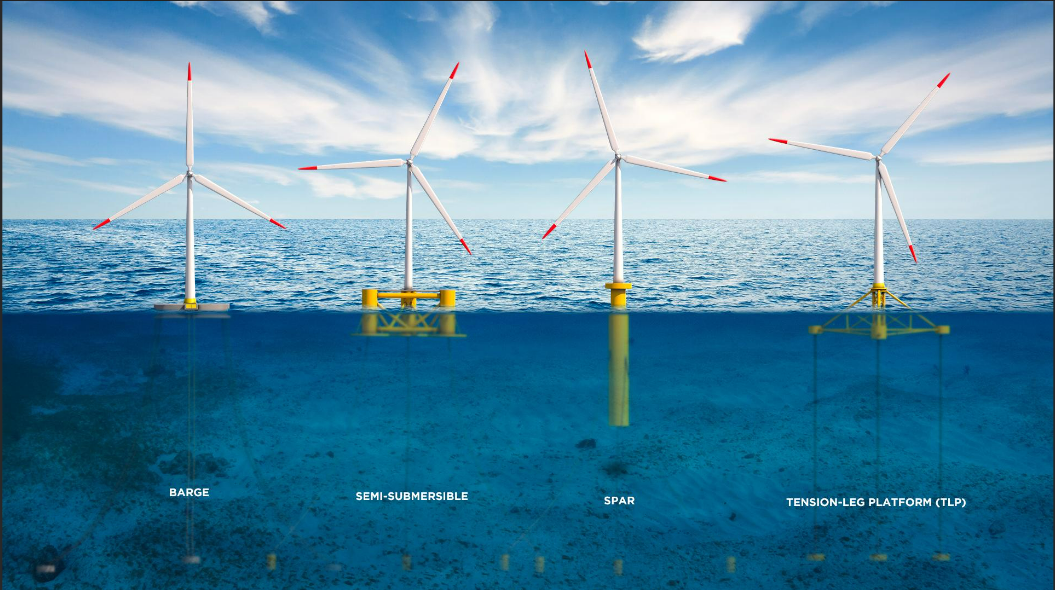
How can floating offshore wind turbines (FOWT) be moored safely and economically? In recent years, discussions around suitable mooring systems have primarily focused on synthetic fiber ropes, and many floating solutions were designed according to this.
However, the technical reasons behind this selective choice were not clear and not evident to the steel rope manufacturers.
For this reason, Teufelberger-Redaelli, in collaboration with the University of Athens and its star-up iWind, renowned experts in this field, promoted and sponsored a scientific study.
On the base of specific and challenging technical KPIs the target was the technical assessment of the steel rope suitability for the floating wind market in comparison to exiting solutions.
For the first time, at least for what available from public sources, steel and fiber ropes performances were investigated in comprehensive systematic approach when alternatively installed on three different conventional floating solutions, two different environmental and met-ocean conditions, and two different water depths.
Over a period of more than 18 months, extensive analyses were conducted.
The results show that steel wire ropes can be just as effective for these applications as fiber ropes. In practice, mooring systems will often consist of a combination of chains and ropes. The study provides valuable scientific insights for evaluating different system concepts and contributes to greater transparency in a rapidly growing industry.
The study , already presented at international industry conferences in Toulon, Madrid, and Houston, raised high interest from the technical audience, and opened dialogues with experts from across the sector.
With this initiative, Teufelberger-Redaelli is making an important contribution to the advancement of the floating offshore wind industry and fostering a fact-based discussion on future mooring solutions. Further activities are currently being prepared to make the findings accessible to a broader professional audience and to strengthen dialogue with relevant industry stakeholders.
Maurizio Meleddu