Less risk, more efficiency: exposure reduced by one-third
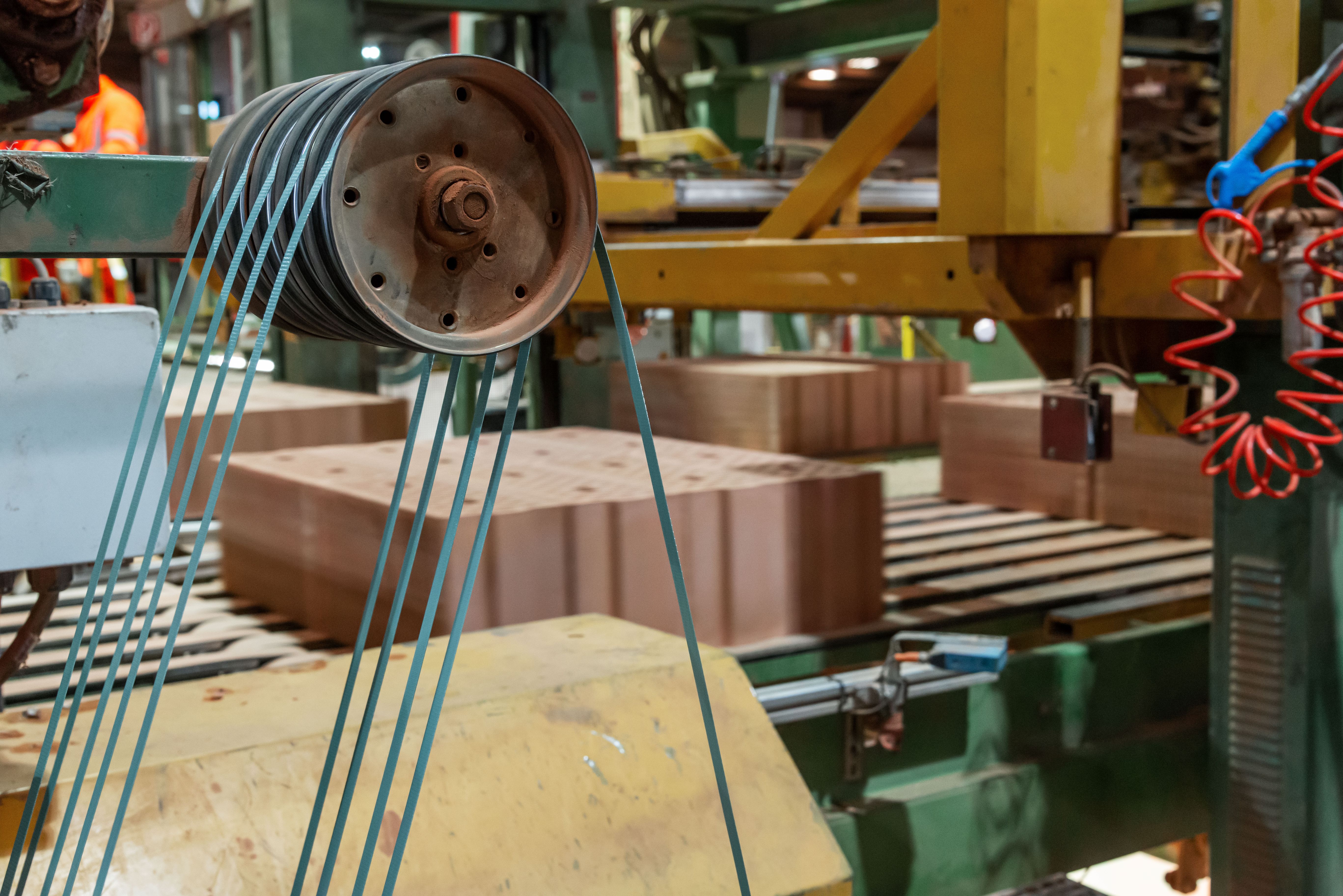
Sometimes the biggest safety improvements come from the simplest ideas.
As part of the Wienerberger Group, the customer in Romania took a closer look at how often operators need to enter hazardous areas in the palletizing section. One seemingly routine task quickly stood out: changing PET strap rolls.
Traditionally, the line was supplied with PET rolls containing 2,000 meters of strap, weighing approximately 14.2 kg. Due to a temporary supplier change, the operation recently received 3,000-meter rolls weighing around 20.9 kg.
At first glance, the heavier rolls appeared to be a potential challenge. But the team decided to dig deeper and analyze the operational impact.
With an average consumption of 30 meters of PET strap per pallet, a 2,000-meter coil secures roughly 66 pallets, while a 3,000-meter coil covers about 100 pallets.
At a daily production volume of approximately 350 pallets, this translates into:
- 5.3 coil changes per day with 2,000-meter rolls
- 3.5 coil changes per day with 3,000-meter rolls
The result? A remarkable 34% reduction in operator entries into the hazardous area for roll replacement activities alone.
Fewer entries mean fewer interactions with potential hazards, less exposure to risk, and a more efficient operation. What initially looked like a minor packaging difference turned out to be a meaningful opportunity to enhance workplace safety.
The findings were compelling enough that the customer approached Teufelberger to explore whether the 3,000-meter roll configuration could become the standard supply format going forward.
At the same time, the team is taking a responsible next step: evaluating the ergonomic implications of the heavier rolls and verifying whether any internal or external requirements, standards, or regulations apply to the increased handling weight.
This case is a great example of how looking beyond the obvious can uncover unexpected benefits. By combining operational data with a safety-first mindset, the team identified a practical solution that improves efficiency while significantly reducing personnel exposure in risk areas.
A simple increase in coil length. A 34% reduction in hazardous area entries. A clear win for safety and productivity.
Stathis Skarvellis